Group Gear

They were ready to go.

Thirty-four Cary Academy students — backpacks loaded, trekking poles at the ready — were finally off the bus and chomping to hit the trail. We woke at dawn, and five hours later we were ready to embark on our four-day hike through the Wilson Creek area in Pisgah National Forest.

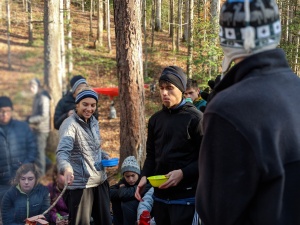
Group gear at campsite.

Hold up. What’s that huge pile of stuff sitting on the ground at the trailhead?

Hot dogs, peanut butter, cream cheese, bagels, oatmeal, pop tarts, pancake mix, dehydrated potatoes, hot chocolate, marshmallows, cooking pans, gas canisters, stoves, water purifiers, first aid kits, bear bags.

That’s our group gear, and we are not going to make it very far without it.

In the excitement leading up to the trip, everybody had set personal goals and taken care to pack their bags for the journey. By all accounts, everybody’s individual pack was already full — and now we needed to make room for the gear that we would share.

Gear that was essential to a fun and successful hike for all.

As each person opened their packs and crammed in more than you thought was possible, the group leaders broke out the scale. The goal in sharing gear on the trail is to balance the distribution based on the size of the hiker, and it was important that everybody was aware of the size of their packs.

I love to go hiking with our Outdoors Club. The trips happen at the end our trimesters, and the timing couldn’t be better for a change of scenery. At the end of any academic term, folks are exhausted. At Cary Academy, our first trimester is the longest. Adding in before term activities like professional days for employees or sports practices for students makes it even longer.

But it’s not just backpackers who carry group gear. We all do.

Faculty work collaboratively to develop new curriculum, mentor a new colleague, or to sponsor important activities. Students serve as teammates and run clubs, conferences, and service projects.

When I travel with the speech and debate team, I always marvel at the collaborative nature of their prep work. They naturally mentor and support one another, sharing evidence and ideas. The same can be said for somebody who mentors a peer to hit an outside jump shot or an overhead smash.

Closer to home, you will find a Cary Academy junior or senior online nightly, using Skype for Business to tutor a student in a younger grade — helping them navigate a challenging assignment, crucial lab, or threshold concept for a course the elder classmate took the previous year.

Along our journey in Wilson Creek this fall, a few students stumbled and twisted their ankles or knees. We paused along the way to redistribute their group gear, so we could all finish together.

The same thing happens quite regularly during any school term. A colleague falls ill, and a few peers chip in to cover their classes. Somebody has a death in the family, and students or faculty do the needful. A new idea excites a group or club, and everybody falls in to make Friday Night Lights or the Drink Cart Challenge a reality.

We all do what we can, when we can — even if that means taking just a bit more than we thought we could.

Of course, this same goes for our parents. Every year, they step up through the PTAA or our Annual Fund to provide activities and resources that enable us to do special things for our students. This is the ultimate in group gear mentality: volunteer when you have the time; give to the annual fund when you have the resources. Some years you can do more, other times less.

In the end, we all benefit from the shared effort — and the school is a much, much better place for it.

As much as I love going out with the outdoors club, I have to say I love coming back too.

Yes, I am ready for the shower and the soft bed … but more than that I love to see the students meet their parents in the parking lot. They have just accomplished something very difficult, and each of them will have a story (or several) to tell.

This also true at the end of the term, the end of a year, and when each one of our students walks across the stage at graduation.

The group gear we share makes each of these journeys possible.

Thank you for what you do to assist with this journey, and Happy Thanksgiving.

Salad Days

Stu Spivack via Creative Commons

As I sat down at the middle school lunch table last week, one of the boys plopped down next to me with this huge, absolutely wonderful looking salad — spinach, tomatoes, corn, sunflower seeds, all topped with balsamic vinegar and olive oil. He had a huge smile on his face.

Wow, I thought, things have come a long way since I was a kid!

He then slid the salad over to Daniel, the friend sitting next to him. Daniel pulled a face and held his nose as he took a big bite. As he shuddered, I asked his friend what was up.

“He lost a bet.”

Ahh. Some things about middle school haven’t changed after all.

Thoughts about growth
Thinking about these boys got me to remembering my own kids’ relationship with food, and in particular the growth spurts that my son went through during various stages of his life. You probably know those times, when the kid just eats everything. Everything. For weeks at a time, all you see is him stuffing food into his face, and you are left wondering what is going on, knowing that he is not exercising enough to burn all those calories. You start wondering what kind of parent would possibly condone this gluttony. Through the guilt, you begin to calculate the cost of his new wardrobe.

Then, BOOM! One day he wakes up a good three inches taller.

And just as quickly as it started, the appetite returns to some semblance of normal. For an adolescent boy, at least.

Once you see this happen a few times, it makes sense. You don’t know exactly when these growth spurts are going to happen, but you can spot the warning signs and breath a bit easier about the food bill.

One size fits all

Even when we understand that the physical growth of our kids can’t be put on a calendar, somehow, we still find ourselves fixed to the calendar for measuring their intellectual growth. Schools are obsessed with calendars and time. We measure it by lessons, units, semesters, and years. We test obsessively, with the underlying assumption that everybody should be at the same place at the same time in their learning. If you are not, you are labeled as behind. If you are a teacher in this type of system and your kids don’t learn at the expected rate, you are labeled as underperforming.

A business analogy

This past week, I ran across an interesting blurb in the Harvard Business Review called “The Case for Focusing on Growth, Not Profitability.” The pressure public companies feel to meet earnings targets can be enormous, so much so that most of us know that we can game the system to buy something at just the right time when sales staff will be eager to hit these arbitrary deadlines. This may or may not be good for the long-term health of the company, but the quarterly earnings season waits for nobody. Such systems can lead to some really bad decision making. Take the ongoing scandal at Wells Fargo, in which sales staff created 3.5 million fraudulent accounts for real customers in order to meet aggressive sales goals. Teachers and administrators in Atlanta fell pray to the same pressures when they altered student answers on high-stakes test scores in 2015.

The HBR authors made the case that focusing on growth over profit will actually create an increase in intrinsic equity, but that this change in focus will require a shift in mentality to achieve.

Tom Page via Creative Commons

No individual is average

Our obsession with measuring our kids against others literally starts when they are born. Mine was nine pounds. How big was yours? (It is noted that on the birth-weight scale, father’s comparisons and mother’s comparisons will likely take the conversations in very different directions.)

I’m a huge data fan, as anybody who has attended my State of the School presentations can attest. However, when it comes to applying data to individuals, I take heed of the words of Todd Rose, who wrote the wonderful book The End of Average. His thesis is that nobody is average, and our obsession with measuring individuals against an average is folly.

A shift in mentality

Thankfully, many schools are catching on. Curriculums are getting more flexible. Teachers are being given more discretion to adjust to meet the needs of individual students. At Cary Academy, our last strategic plan saw us make a subtle but important change to our definition of excellence — which is one of the four pillars in our mission to be a learning community committed to discovery, innovation, collaboration and excellence.

Cary Academy recognizes excellence as meaningful growth resulting from dedicated pursuit of individual and shared goals.

There will always be times in which we must compare ourselves against standards, but it is nice to see that we also recognize that growth is a life-long journey.

I am certain that one day Daniel will happily reach for that salad without grimacing.

Strategic Plan – Year 2

Strategic Plan Update

We have completed the second year of our Cary Academy 2020 Strategic Plan.

Our Vision

Cary Academy will create learning opportunities that are flexible, personalized, and relevant. We will cultivate self-directed and bold life-long learners who make meaningful contributions to the world.

Goal 1: Institutional Flexibility

Cary Academy will create institutional flexibility to facilitate innovative and dynamic learning experiences.

Twenty years into our history, Cary Academy is boldly embracing our founding vision to challenge our thinking, expand our programs, and reimagine physical spaces to facilitate innovative and dynamic learning experiences for our community.

As we close our second year of our strategic plan work, we can look back on multiple accomplishments that have created a springboard for the next three years. As a perpetual motion machine is launched, we have identified mindset and meaningful curriculum review as the engines of deep educational reflection and renewal.

Mindset

Our teachers and staff continue to explore new approaches such as design thinking to promote more empathetic, creative, and action-oriented work in and out of the classroom. Middle School teachers shared some of these new classroom approaches with North Carolina colleagues at our fall educators conference. Upper School students participated in our first entrepreneurial competition, the Drink Cart Challenge, that came from a Business Office exercise with the San Francisco-based design firm IDEO. Both divisions have collaborated on a new schedule design that will allow us to offer more flexibility in the school day during its pilot year in 2017-2018.

Curriculum Renewal

Through these conversations online, blended, and experiential learning programs have all been augmented, allowing students more flexibility in how they fulfill personal learning interests and graduation requirements. Significant new course offerings and tracks of study have been developed in the Upper School arts, sciences, and physical education programs.

While many of these changes are intangible, our spaces, from furniture that creates more flexible learning environments, to collaboration spaces and community- centered office spaces, underscore the deep commitment that all community members are benefitted from this work. 

Goal 2: Authentic Engagement

Cary Academy will foster the intellectual and cultural elasticity needed to adapt and thrive in the world.

Cary Academy continues to introduce new projects aimed at creating learning opportunities for students that allow them to explore topics of personal interest in real world context.  Examples include:

  • A doubling of the scope of our new Discovery Term Work Experience Program, from 25 internships in May 2016 to more than 50 in May of 2017. These hands-on experiences offer our students a chance to see first hand the inner workings of different professions and industries and learn from skilled practitioners — some have even transitioned into full summer internships.
  • The launch of the Lenovo Scholars Program, in which participating students have mentorship lunches with Lenovo executives and participate in activities ranging from experimentation with new technology to visiting a distribution center.
  • The creation of a new Advanced Biotechnology course that provides students with a learning experience founded in authentic research problems in collaboration with area scientists.

Students are not the only ones taking advantage of new opportunities to connect with the corporate community to learn.   In an initiative sponsored by the Middle School Instructional Technology Team, nearly all Middle School faculty have now completed certification as Microsoft Innovative Educators, with particular emphasis upon the use of the OneNote application.  Meanwhile, Cary Academy’s participation in the National SEED Project (Seeking Educational Equity and Diversity) has been expanded to include parent and student cohorts.

Looking ahead, a group of Upper School faculty is currently investigating the possibility of introducing a new year-long community-based civic engagement experience for students that will allow them to work with outside organizations to address real-world problems in the greater Triangle area.

Goal 3: Strong Communications

Cary Academy will strengthen existing relationships and build new connections to embrace multiple perspectives and opportunities.

The focus of our work in this goal area has been on both strengthening the ways that we communicate with our day-to-day community as well as build connections with our alumni and forge new partnerships.

Communications

Starting with a communication audit in 2015, we have embarked on developing a communications plan to refresh and align the school’s visual identity and strengthen our communications. This past year we embarked on a project with the Atlanta-based firm Mindpower to update key artifacts like our logo and create a comprehensive Brand Toolkit and corresponding website that can be used across our constituencies. This past year we launched our CA Weekly email to streamline communication and developed a social media action plan to further improve our use of these important tools.

Internally, we’ve launched a review of our communications structures, systems and tools. This review will extend into the third year of our strategic plan and is designed to help connect and streamline our various software packages such as internal and external web sites, calendaring programs, student information systems, and workflow reporting and management systems.

Connections

Our first TEDx event for students and alumni was a huge success and was an early part of a very successful year-long 20th Anniversary celebration that touched programs across the school. Our retrospective MusiCAl! was a fabulous walk down memory lane for our community and was able to incorporate alumni in some of the weekend performances. A purposeful partnership with parents, the Upper School, and the Alumni Office, led to a highly successful Career Connections program with our largest ever number of alumni speakers, including keynoter Uzma Rawn ‘02, senior director of sponsorships for Major League Baseball and a Forbes 30 Under 30 winner.

Collaborations

Our Research and Development Team is a cross-organizational group formed to look forward for new opportunities for the school. They, along with other project-focused teams, have spread out around the country to look at innovative practices at other schools and bring ideas to CA that fit our community and our mission. In addition, we have joined or formed new collaborations of top independent schools in the US and around the world to benchmark our programs and work to develop new opportunities for our employees and students. In the spring of 2016, we took a group of students to a social entrepreneurship summit at the American School of Bombay. New collaborations will take place with Nueva School in San Francisco in the fall of 2017 and with the American School of Singapore in the spring of 2018.

We also launched our Cary Academy Teaching Fellows program.

Goal 4: Appropriate Resources

Cary Academy will build the professional and learning environments necessary to realize our strategic vision.

We have been hard at work making sure that our human, physical, and financial resources can provide the supports necessary to meet our vision.

Human

After an evaluation of staffing ratios, we expanded some Upper School staffing levels to accommodate needs of current and new programs — ensuring that we keep class sizes at optimal levels and give our faculty the best opportunity to build individual connections with students. We’ve also reorganized and reassigned some staff to create better workflow for day-to-day operations and purchasing. As the start of an effort to review our compensation programs, we formed a working group to create Compensation Philosophy statement that could guide further work in this area. (See attached document.)

Physical

We continue to focus on maintaining and improving our campus to provide the best possible learning environment. Development of a Campus Master Plan launched this work, and in the past year we designed and renovated several new spaces, including:

  • a brand-new Design Lab in Berger Hall for use by the Middle School,
  • the renovation of our old lecture hall into a multipurpose presentation and collaborative space we are calling the Discovery Studio,
  • a college counseling suite to accommodate an increase in counseling staff,
  • a collaborative space for Upper School students that we are informally calling our “collab-a-lounge,”
  • a multi-use classroom suite that quickly can be transformed from a large-scale workroom into two classrooms or three studios, depending on need.

Planning took place all year for a new science building that will be built adjacent to the SEA. We expect construction to begin this summer and last a year.

Financial

A Capital Campaign Steering Committee has been at work all year on the leadership phase of a fundraising effort to support our facilities and strategic plans.

(Re)

This spring I was invited to the American School of Rio de Janeiro to talk at the annual Association of American Schools in South America educators’ conference. I’ve spent a considerable portion of my career working overseas, including 10 years at Graded School in Sao Paulo, Brazil. I actually helped to plan this very conference twice when it was held on our campus. I was delighted to come back and share with my former colleagues.

The theme of the conference was (Re). Its focus was on innovation — on revisioning education for the 21st Century. As a relatively young school with impactful technology integration, Cary Academy has a strong reputation in this space. The focus of my keynote, however, was not about technology. It was about culture.

The more I think about the challenges ahead, the more I am convinced that we need to have school cultures that model the mindsets and behaviors that we want to instill in our students. Cary Academy has lived this part of its mission since the school’s founding, but as the world continues to change we’ve had to double-down on our efforts. This is why the first two parts of our current strategic plan focus on institutional flexibility and authentic engagement. The further we move into this work, the stronger I feel that we are on the right path.  

Three Things
As such, the school gave me a rich set of experiences to illustrate my point. In fact, most of my message was conveyed through story. Here’s one:

Earlier this semester, I was out in Silicon Valley meeting with one of our more entrepreneurial alums. He had sold his startup and had been asked to stay on as CEO and help the new owners manage the spectacular growth of the firm. He spends most of his time hiring and trying to manage the culture of the organization. Curious, I asked him what he looks for in new employees.

Without skipping a beat, he said people who are:

  • smart,
  • nice,
  • and get things done.

I love this. There are a lot of people studying the skills needed for the future workforce, and you can find many outstanding (and often dense) lists. In addition to its brevity, what I also loved about this take was how it challenges us in schools.   

You expect your good schools to develop intellect. You want your outstanding schools to nurture character. Too often, though, I think schools get too wrapped up in measuring student success as the ability to follow directions and meet deadlines. Former Yale professor William Deresiewicz decried this mindset and said that what these schools produce are excellent sheep.

What this third point really means is that the companies of the 21st century need employees who can operate when things are ambiguous and who will ask their own questions and work together to find solutions. As Harvard’s Tony Wagner has said: The innovation economy requires us to help students go from problem solvers to problem seekers.

Often times, this mindset is nurtured through problem- and project-based learning in the classroom and involvement in athletics, arts, and school activities. For our young CA alum, this particular mindset was honed through his involvement in a school club that developed web sites for local businesses. There are countless other stories that illustrate the power of such experiential learning.

School culture is important because it is the living manifestation of our real beliefs, not just what we put on a website or brochure. We all learn behavior and adopt mindsets by watching those around us in action. Students spend a lot of time in school, and therefore it is imperative that they see the adults in school embrace change and learn from setbacks too. In the language of design thinking, this is called a bias towards action.

It was a joy to share some of the exciting things happening at Cary Academy with colleagues from around the world.

Learning Community

Inspired by the view out the window when writing Japanese poetry.

At the end of my day shadowing a student, all I could think was: I am going to sleep well tonight.

As I write this reflection, I’m also wondering whether I used the colon correctly in my previous sentence. That seems odd, but I guess the grammar lesson in period three was pretty sticky.

I spent a full day tagging along with Will, a Cary Academy 6th-grade student, as part of the national Shadow a Student Challenge. I accepted when our school entered a joint project with the Design for Learning Studio at IDEO to use the principles of design thinking to tackle thorny organizational problems. The goal, I suspect, was to center our thinking by deeply exploring the student experience at our schools. If so, mission accomplished.

My day started in band class, and before I trundled home that afternoon I had joined a national research project to measure ultraviolet rays, diagrammed sentences, won a contested game of capture the flag, programmed a computer animation of my family speaking in French, built a scale model of an Antarctic research station, written Japanese Waka poetry, and participated in a schoolwide scavenger hunt as part of Cary Academy’s 20th Anniversary celebrations.

Yeah, I slept well.

Parents are known to joke about the monosyllabic responses their kids give to the timeworn dinner table starter: “What happened in school today?”

Well kids, I feel your pain.

I joined our teachers for a faculty meeting at the end of my shadow day, and when all eyes turned to me all I could muster was a thumbs up. I was too beat to process all that had happened and frankly didn’t know where to begin. You kinda’ had to be there.

With a fresh night’s rest, I think I can put the day into better context with two words.

Purposeful
Will and all his classmates moved through their day with precision. Cary Academy has no bells, and in some cases we only had three minutes to pass between class. Transitions can be difficult for anybody, even more so for younger learners, but Will and his classmates had clear routines in place that made these transitions so much easier. Each time we got to a new room, he settled into his space, opened his laptop and got started with something. The teacher was present but didn’t need to cue anybody to the opening routine, which was important because some students were coming from other buildings on campus and thus filtered in at different times.

Once the teacher took control, there was a clear design for their time together. It varied greatly between the different classes, but it was always active and in most classes highly collaborative. Instructions were easy to follow, and the students were able to move into their work smoothly. It was clear that they were used to being active participants in their classrooms. In science class they were reviewing and selecting from 43 possible individual citizen science research projects that had been curated by the teachers. In math class they were asked for their opinions on what activities they should do to demonstrate their learning over the next three days. In the scavenger hunt, they were put in foursomes and used a phone app to find answers around the campus to school trivia.

All of the classes used technology in seamless ways, and I was impressed with how smoothly the students used these tools: OneNote to organize materials across all classes, noredink.com to test grammar knowledge and goAnimate.com to make French come alive. When the laptops were not needed, lids were closed and focus was on the task at hand.

Connected
It would be fair to think that so many transitions between classes each day might make for a disjointed experience. My day with Will was certainly busy. We moved purposefully but never felt rushed. Even though we moved between very different activities, the day felt connected. It was clear that Will’s teachers talk to each other, and that they enjoyed working together. They spoke knowingly and excitedly about things they knew the students would be experiencing in other classes, and this was oddly reassuring. It felt like I was a part of something bigger than just myself.

Behind the scenes, there where were norms of behavior everywhere. Assignments written on the corners of all the whiteboards. Soft but purposeful starts to the class, allowing students to transition in without shame if they had to use the bathroom or come from further across campus. Discussions were natural and questions were honored, not treated as nuisances. There was an occasional adolescent outburst — an inappropriate shout out or overly robust laughter — but these were corrected not by an obvious teacher scold but by the lack of oxygen given by peers. They simply burned out as folks went about their business.

A few years ago, our strategic planning committee struggled mightily to try and define the term “learning community” in our mission statement. They should have just shadowed Will for a day.

Double Trouble?

Perhaps the most dreaded question for students at the transition stage between high school and college is:

“What schools are you applying to?”

Most often the person asking is genuinely curious, but the question is also so loaded that it can have the effect of reducing your entire existence down to a college brand. As a result, we often counsel our students to pursue this process privately with their immediate family.

Just when our students think they’ve mastered the non-answer (oh, I’m looking at some liberal arts schools on the east coast) or the polite deflect (oh, I’m trying not to stress so I’m not talking about that too much) — they get the next most dreaded question:

“Fair enough, but what do you think you’ll major in?”

Naturally, for many high school seniors or college first years, there is no answer to this question because they simply do not know yet. There is much more to explore before making that decision.

According to a 2010 survey of college graduates, 20% of students will ultimately decide to double-major. This seems wise for those who might have broad interests or simply as a way to hedge a bet about career paths.

Perhaps counterintuitively then, the results from a recent study in the Journal of Benefit-Cost Analysis tell us that double-majoring may have little ultimate benefit for career satisfaction or pay.

In a discussion with the Wall Street Journal, the study’s authors say they found no correlation between double majors and job satisfaction. Because many double majors may pick two diverge disciplines, say math and theater, they also find limited opportunity to combine both sets of skills in their ultimate career.

This is not to say that double majoring might not be the right fit for students, but the authors warn that it could restrict access to other electives of interest (in the pursuit of hitting all the courses required by each major) and thus reduce rather than increase satisfaction at college.

The one path where double majors did seem to pay off, earningswise? A STEM field and business.

Entrepreneurs rejoice!

Storytelling

ppt-segue-quad

One of the most rewarding, if sometimes daunting, roles of a Head of School is to be the chief spokesperson for the organization: Head Storyteller, I sometimes call it.

This is rewarding because … well, because Cary Academy is pretty great and there are a lot of wonderful stories to tell. It can be daunting, though, because what I choose to talk about can send its own message. I could get a fact wrong. I could highlight something that makes another group or individual feel left out. I could mispronounce the name of one of our Founders. During my opening convocation. In front of said Founder.

Like I said, danger lurks everywhere.

This fall, I’ve had occasion to talk a lot about the history of Cary Academy to employees, students, and parents. It has been wonderful to reflect on our history, and I’ve gotten most of it (pretty much) right.

There are other occasions when I’m asked to speak to outside groups. In those cases, I may occasionally speak directly about the school, but I am most often representing an idea about school. What I mean is that it is not good form to stand up in front of a group and brag about Cary Academy. People at other schools really don’t want to hear that (I know, crazy). Instead, I share how “schools” can approach innovation, professional development, technology integration, community outreach, or whatever other topic is on the docket. Of course, since I am the head at Cary Academy, I may use some examples from the school to illustrate these larger concepts or truisms.

This is not my unique responsibility, as each year a very large number of our employees branch out to speak at conferences, workshops, or even directly at other schools. This is an important part of our founding vision: to collaborate and share professionally with peers.

This year, I’ve found myself speaking most often about the importance of school culture. I think this is one of the most important elements of a great school, but also one that is very difficult to nail down. Culture can be talked about in many ways. You’ve probably most often heard culture described as an “iceberg,” with the below surface elements being big (and, as the metaphor goes, potentially dangerous if you miss seeing them). Some of the most well respected researchers on culture have called it “software of the mind.” In education, I’ve often heard culture described as “the way we do school.”

Our Leadership Team has been talking about culture since the start of the school year. It began when we read an article in the Harvard Business Review about a culture slide deck produced at Netflix. We soon moved on to reviewing the slide deck itself. All 147 slides. (Warning to all of you who get tired of my huge slide decks at parent coffees and employee meetings: It could be worse.) This slide deck is famous for the approach it took to human resources. Its title: “Netflix Culture: Freedom and Responsibility” sums up quite a lot.

This deck inspired us to try and write a culture code for Cary Academy.

Needless to say, this has proven to be a lot harder than it sounds. We’ve spent weeks working on various drafts, and at our last meeting we had two full white boards filled with lists, phrases, and paragraphs. Part of our problem was that haven’t been quite clear on the audience for this particular “statement on culture.” We don’t even know if we want to call it a “statement on culture.”

In all of our brainstorming, though, we did come up with one sentence that has stuck with me ever since:

“We are maniacal in pursuit of our mission.”

Not everybody liked that word maniacal. For some it didn’t sound “schooly” enough. They pushed for “relentless.” Maybe others thought maniacal evoked an image of clowns. Clowns are bad right now.

Me? I kind of like maniacal. Whenever I talk about Cary Academy to outside groups one of my go-to phrases is that this school, more than any other I’ve ever been to, lives and breathes its mission statement. Maybe maniacal is a bit over the top, but with culture you kind of want folks to see that part that is under the surface and this word gives you fair warning that something big is lurking.

As Head Storyteller, however, I can’t end a column about culture on a statement.

Just a few weeks ago, I got stuck when I was preparing one of my more recent talks. I was scheduled to address a few hundred educators at a conference in Boston, and I had already asked my colleagues, but something was still missing. I just could not pinpoint why. I decided to ask some students in the speech class that I co-teach. I pulled them aside and read them my 10 minute oratory. When I finished, they were silent at first. I could tell that they were processing: What EXACTLY should we tell Dr. Ehrhardt? Last we checked, he kinda gave us grades in this class, not the other way around.

The pause didn’t last long before they unloaded: I didn’t get when you said X. Your point about Y was lost because you overemphasized Z. That joke in the middle: not funny.

Yikes.

It was great. Exactly what I needed to hear. I went late into that night re-writing major portions of the speech, and delivered the new version to positive reviews a few days later.

That is Cary Academy.

Strategic Update

As we head towards the close of our first trimester we are getting ready to welcome grandparents to campus on November 4th, the same day we will inaugurate our new Discovery Studio with our first TEDxCaryAcademy. These events will mark the second wave of 20th anniversary celebrations at CA this year. 

We kicked off our 20th year with an employee “birthday party” to mark the occasion, and during our first week of school we gathered the entire community for a picture on the quad — with everybody decked out in new CA shirts.

We opened our first year with 244 students in grades 6-10. This year we open with 761 students. Roughly 53% of students who apply are admitted, and 85% of those accept our offer. Students of color make up 36% percent of our enrollment. Only 3% of students leave the school each year before graduation. All of these metrics place us among the most high performing of independent schools.

In 20 short years, Cary Academy has established an outstanding reputation among top colleges and other organizations. We were thrilled to have three alumni recently named in Forbes “30 under 30” and to see seven others come back to speak at our TEDx on Friday. 

Cary Academy’s founders envisioned a college preparatory school that serves as an engine for student-centered, technology-rich instruction embedded in a liberal arts tradition. We owe a great deal to those who have come before to build what Cary Academy is today. As I mentioned in my opening convocation speech to the Upper School students, we pay this forward by reinforcing our community values and culture each and every year. Our school history now gives us a proud heritage, but it is renewed with each generation of families and students who pass through the halls.

mediawall
Media wall being installed in the Discovery Studio.

Moving our programs forward

At the beginning of T2, we will formally open the new Design Lab and Discovery Studio in Berger Hall. We’ve removed the grand staircase to make a new space in the ground floor, which will be used for MS robotics and as a multi-purpose art classroom. We’ve removed the raised seating in the old Lecture Hall to create a more flexible space, which can be used with no furniture (dances, art shows), with 140 chairs in lecture format, or with tables as a seminar space. The room will have two white “write walls” and a multimedia wall for presentations. The room will be ideal for our first TEDx. 

We’ve got a lot of great things planned for the coming year. Here are just a few highlights that will emerge from our strategic plan:

  • We will continue our curriculum review process, with science and math in the program development phase and the English and social studies departments beginning their review and research phase;
  • we will launch a new computer science department and a Microsoft credential program;
  • we will form a new communications team and review the new weekly email that we launched this fall;
  • we will move to the next phase of our master facilities plan, which involves detailed planning for a new science center;
  • we will launch a girls lacrosse program and an athletic leadership development program;  
  • and, we will continue to celebrate our 20th Anniversary with a musical revue in February.  

We have much to be proud of during this anniversary year, and we stand in a position of strength to build an even stronger school moving forward.

Still Curious

curious2

Twenty years ago, Cary Academy was founded as a learning community committed to discovery, innovation, collaboration, and excellence. This mission has been our guiding force for two decades, and our anniversary celebration this year provides a natural time to follow the thread from the school’s founding vision to our current reality.

School for the Future

From the beginning, Cary Academy was touted as a “school of the future” — with a great deal of attention paid to our strong integration of technology within a core liberal arts program. The school’s founding in 1997 coincided with a great deal of excitement and innovation in the world of technology-enabled communication. Our students had email accounts! Our network was available throughout campus and in the home! Our computers and systems would facilitate new, engaging ways to interact with each other, content, and the wider world.

CA opened during the lift-off of the global internet. We have grown alongside web pioneers like Yahoo, Amazon, and Netflix that were foundlings in the late 1990s. Not everything turned out as advertised, but in the subsequent years two of these firms have gone on to completely disrupt the way we shop and the the way we watch “television.”

School assembly on quad in 1998.

We had the great fortune to have visionary and generous founders. Inspired by the quad at the University of Virginia, we opened with a beautifully formed campus that immediately set the tone that this would be a serious place of learning. We would infuse a traditional liberal arts philosophy with new pedagogical and technological techniques for the 21st century — bringing to mind F. Scott Fitzgerald’s definition of first-rate intelligence: the ability to hold two opposing ideas in your mind at the same time and still function.

Well, we have done more than just function these past 20 years. A recent survey of 225 alumni makes it clear that we have transformed lives. A few representative comments:

“When I went to college, I was markedly better prepared than most of my peers- my ability to write and think critically put me ahead straight away, and helped me stand out to my professors. I was used to being asked for more than memorizing and spitting back information. Not only did those skills serve me well in college, as I’ve gone forward in my career, they continue to be a key factor in my success.”

“Cary Academy provided the environment and academic rigor that shaped me into the person I am today. My experiences at Cary Academy were more influential in my development than any other period of my life. In short, Cary Academy taught me what it takes to be successful in life. I am forever thankful to my alma mater, its faculty, and staff.”

The Future is Always Moving

As we celebrate 20 years of being a school for the future, it is appropriate to look forward as well as back. We are thrilled that our early bet on the power of information technology has borne some fruit — but where are we headed next?

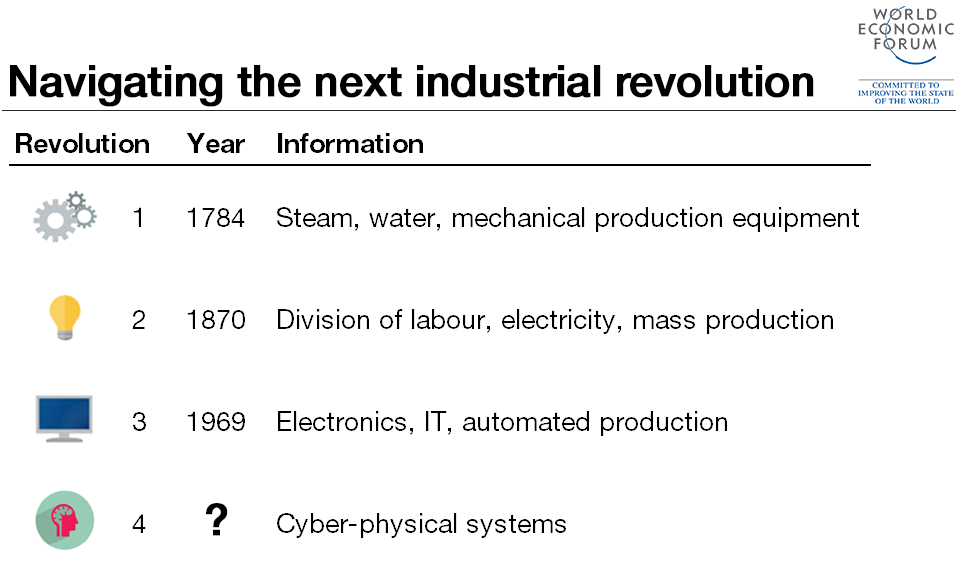
At my opening meetings with faculty and staff, I shared some visioning from the World Economic Forum. They believe that we are on the cusp of a Fourth Industrial Revolution, which will take us beyond the information age into a merging of biological and physical systems, not only disrupting systems and creating new ways of interacting with the world but literally transforming who we are as physical beings.

It is pretty heady stuff, and it is by no way clear how many of these ideas will play out. However, we are preparing students in 6th grade today for a world that could be markedly different when they finish college.

We have attempted to capture this spirit in the vision for our current strategic plan:

Cary Academy will create learning opportunities that are flexible, personalized, and relevant. We will cultivate self-directed and bold life-long learners who make meaningful contributions to the world.”

If you have followed our strategic updates or my earlier blog posts, you can see we have begun launching new programs and initiatives that will help us fulfill this vision. Examples include the new MS “citizen science” component that engages our students with data collection and analysis to answer real-world problems or the Work Experience Program launched in the US last year that allowed more than 20 juniors to have an individual, embedded experience with a local business or not-for-profit during the Discovery Term.

curious

Back to the Future

As we take the opportunity during this anniversary year to reflect back on our founding, we can draw some clear threads from our past to our present. Evan as much has changed in our world and our operations, two things most readily connect us today with the founding vision for the school:  

Cary Academy remains optimistically future forward
In 1997, Cary Academy believed in the future potential of a technology-rich learning environment. At the time, that meant web sites and email communication, and we’ve since moved to mobile, blended learning, and an introduction of many new hands-on tools for science and robotics. At the core, our culture has always been about walking towards the future rather than away. We expose students to a learning organization, and make our learning a part of their learning. We have always believed that students will be much better served to head into a changing world if they are a part of a school that eagerly and transparently embraces change as well.

Cary Academy remains student-centered
In 1997, Cary Academy strived to inspire each student as an individual. We did this by giving our teachers smaller classes and the freedom to adjust their curriculum to match their students needs. We have lately been pushing the boundaries of our institution to look at new programs and paths of studies that are more flexible, relevant, and connected with others outside our walls. We know that learning happens in a social and emotional context, and we want students to work problems that are meaningful to them.

In the end, we want to nurture both institutional and individual curiosity. There is joy, meaning, and impact in this approach towards school and towards life.  

CA @ 20: Still Amazing

Here is a copy of my speech to the Upper School during the convocation at the start of our 20th Anniversary Year.

____________________

As I did a little primary source research preparing to celebrate our 20th anniversary this year, I came across several television news reports from 1996 and 1997 that announced the formation of Cary Academy as a “School of the Future.”

Of course, this school of the future would have The Internet, which was so young that both “The” and “Internet” were still being capitalized. Only one percent of humanity was on the World Wide Web, which is what they called it back then — when the world felt much wider. Cary Academy teachers would learn the coding to create their own web pages that students could access on computers in every classroom that were “networked” to each other and our very own servers with miles of wires spread throughout the campus. CA would be too cool for just The Inter-net; it would have its own Intra-net. The A was for amazing.

Speaking of A, at our founding, the Amazon was still most famously a river. The online store sold only books. It wasn’t supposed to be named Amazon, but when the original name “Cadabra” was misheard as cadaver, founder Jeff Bezos changed it to Amazon, in part because web listings in Yahoo were being done alphabetically.

We didn’t get to start at the beginning of the alphabet and became Cary Academy, which is never shorted to just Cary. Hipsters sometimes call us The Academy though.

The big news during those founding days was that CA would give email accounts to faculty and students to create a wondrous communications nirvana. And in those heady early days, students actually read those emails.

Cary Academy had the great fortune to have both visionary and generous founders. The school opened with nearly all of the buildings that you see right now, red brick emerging from the red clay. From the very beginning, our campus facilities have set a tone that this place is serious about learning. We would bring the best of traditional, liberal arts education into the 21st century. Teachers would have the freedom to use new tools and new methods to inspire and empower students, giving you the skills you need to thrive in college and beyond. The school was forward facing from those very first days.

Of course, when a campus like Cary Academy emerges so quickly and so beautifully, it can run the risk of not feeling real — like Epcot Center. You can walk onto campus and feel that you have walked into some magical place that is not of this world. A fake school.

If those first students felt that way, they quickly learned another lesson. Our buildings and our technology might set a tone, but it cannot build a culture. Those early classes had to collaborate with each other and their teachers to establish traditions, activities, and expectations. That first year, they established 14 clubs. The second year, they established an honor code. Those early students were fundamental in turning Cary Academy from a set of school buildings into a powerful community. They were given an opportunity to be a part of something special, and they took advantage.

Last year, we surveyed our alumni to ask them about their experiences at CA. Here is a representative sample of comments:

The seven years at Cary Academy really defined my personality and who I am today. The biggest impact was being in a community of other students who were the right combination of intellectually curious, ambitious, and passionate. Many of these people are still close friends.

Cary Academy provided me the environment and the academic rigor that shaped me into the person I am today. My experiences at Cary Academy were more influential in my development than any other period of my life. In short, Cary Academy taught me what it takes to be successful in life.

Cary Academy was a school that challenged me to be a better student, community member, and person.

I credit CA with my professional accomplishments, as it set the foundation for what I would later achieve in life.

I would not be where I am today (master’s degree and a great paying job, with knowledge and emotional intelligence) without having a foundation in Cary Academy.

It is an amazing community of people.

For these graduates, Cary Academy was as real as it gets.

But think about that last quote for a second: “an amazing community of people.” I suspect that those students are all graduated. It could be that a good deal of their teachers are gone as well. The funny thing about school is that the community changes every year, and it is up to each of us, each year, to create community, to reinforce culture. If we don’t do it, who will? If all those amazing people have gone, I suppose we can settle for … adequate.

“Cary Academy: An adequate community of people.”

But, if you are engaged, open-minded, curious … this school can change your life. You have to want it. You have to work for it. You have to own it.

Exciting changes are happening all around you, and you have opportunities to do things that past students never could have imagined. We continue to reimagine the CA experience for a new future, and you have the chance this year, right now, to contribute to the community and culture that embraces these exciting opportunities. That is as real as it gets.

So let’s get back to it: Are we adequate or amazing?

That’ what I thought.

The A in CA has always stood for Amazing.

_______________

Postscript: Please enjoy the short video we put together to commemorate our 20th Anniversary.

Skip to toolbar